
Pharma Giant Unveils $10 Billion Research Investment Plan
Ads
A major pharmaceutical company has announced a landmark $10 billion investment to build state-of-the-art research facilities, marking the largest single investment in the company’s history and signaling a bold bet on future medical breakthroughs.
Ads
The pharmaceutical industry just got a massive shakeup. One of the world’s largest drug makers has officially announced a major pharmaceutical company announces $10 billion investment in research facilities, a move that could reshape the entire landscape of medical research in the United States and beyond. This isn’t just another press release about corporate spending—this represents a fundamental bet on where the future of medicine is heading.
Ads
The Announcement That Changed Everything
When executives took the stage at the company’s quarterly earnings call, they delivered news that caught Wall Street and the scientific community alike off guard. The investment, spread across the next decade, will fund the construction of five new research campuses strategically located across the United States. Each facility will house hundreds of scientists, researchers, and support staff dedicated to accelerating drug discovery timelines that have historically taken a decade or more.
The timing of this announcement comes at a critical juncture for the pharmaceutical industry. After years of mounting pressure from investors to deliver short-term returns, this long-term bet represents a philosophical shift in how major drug companies approach innovation. Rather than focusing solely on incremental improvements to existing drugs, the company is positioning itself to chase genuinely transformative therapies.
Where the Money Will Go
- Construction of five new research campuses in key biotech hubs
- Installation of next-generation AI and machine learning infrastructure for drug discovery
- Recruitment of over 5,000 new scientists, researchers, and support personnel
- Partnerships with leading academic institutions for collaborative research
The company has been vague about exact locations, but industry insiders suggest campuses in Cambridge, Massachusetts, San Diego, and the San Francisco Bay Area are priorities. These regions already host dense clusters of biotech talent and research institutions, making them logical choices for expanding the company’s discovery capabilities.
Why $10 Billion? The Strategic Calculus
Industry analysts have spent weeks dissecting this announcement, trying to understand the strategic thinking behind such an enormous commitment. The answer, according to company leadership, lies in the changing economics of drug development. Traditional pharmaceutical research models are becoming increasingly expensive and time-consuming, with success rates for new drug candidates remaining stubbornly low.
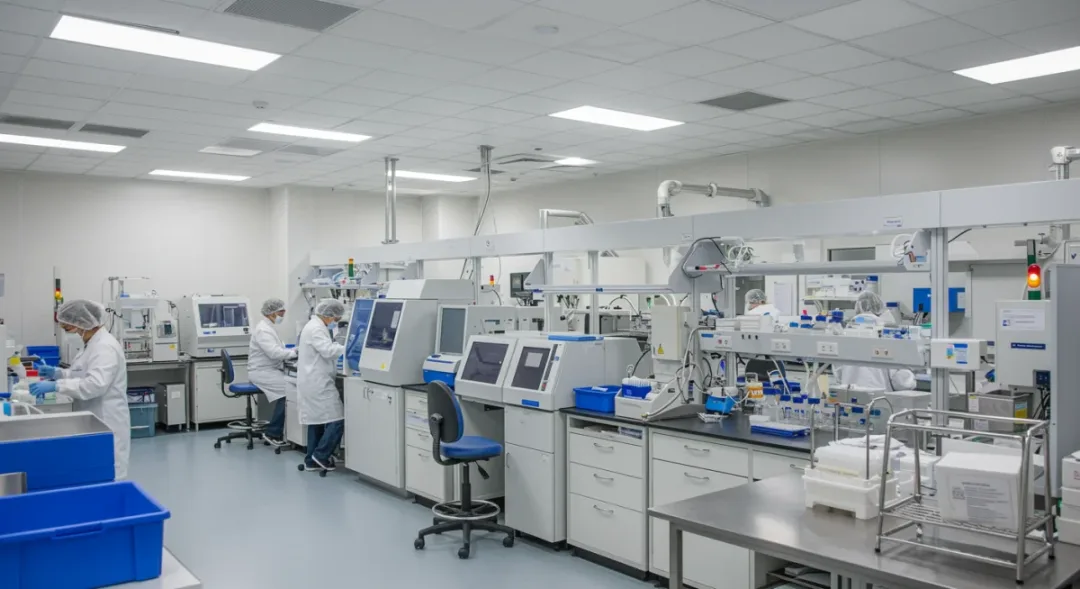
By investing heavily in new facilities and technologies, the company hopes to fundamentally alter these economics. The new research campuses will feature specialized infrastructure for emerging fields like gene editing, mRNA technology, and cellular therapies—areas where the company believes the biggest opportunities lie. These aren’t just incremental upgrades to existing labs; they’re purpose-built environments designed around entirely new paradigms for drug discovery.

The investment also serves a competitive purpose. In recent years, smaller biotech companies have dominated innovation in cutting-edge areas, often outmaneuvering larger rivals through agility and focus. By building state-of-the-art facilities and hiring aggressively, the company aims to attract top talent that might otherwise gravitate toward startups offering equity stakes and faster career progression.
The Competitive Landscape
- Major competitors have announced combined research budgets exceeding $30 billion annually
- Smaller biotech companies continue to lead innovation in gene therapies and RNA treatments
- Academic medical centers are forming more industry partnerships to accelerate translation of discoveries
- Regulatory pathways for breakthrough therapies have become more streamlined in recent years
This investment should be understood as a response to these competitive pressures. The company is essentially declaring that it intends to compete at the highest levels of medical innovation, regardless of the cost or timeline required.
Impact on the American Healthcare System
The announcement carries implications far beyond the company’s balance sheet. With five new research campuses planned, the investment will create thousands of high-skilled jobs in communities across the country. Each campus will employ hundreds of PhD scientists, laboratory technicians, and support staff, representing a significant economic boost to whichever regions ultimately host these facilities.
Beyond direct job creation, the research conducted at these new facilities could yield treatments for diseases that currently have limited therapeutic options. Company executives have specifically mentioned cancer, neurodegenerative conditions, and autoimmune disorders as priority areas. If even a fraction of the research investments yield successful treatments, the impact on patient outcomes could be substantial.
The pharmaceutical industry has faced relentless criticism over drug pricing and access in recent years. This investment represents, in part, an attempt to change the narrative. By emphasizing long-term research commitments rather than short-term profit extraction, company leaders hope to demonstrate a different approach to healthcare innovation—one that prioritizes breakthrough science over incremental gains.
What This Means for Patients
- Potential for new treatments targeting previously undruggable diseases
- Increased competition could drive down prices for existing therapies
- More clinical trial opportunities for patients seeking experimental treatments
- Economic benefits for communities hosting new research facilities
Of course, patients won’t see the benefits of this investment tomorrow. Drug development operates on decade-long timelines, and even the most well-funded research programs face significant obstacles. But the announcement signals a commitment to pursuing treatments that might otherwise never receive adequate investment.
The Technology Behind the Investment
Perhaps the most intriguing aspect of this announcement involves the technology infrastructure the company plans to build. The new research facilities will feature what company executives describe as “AI-first” approaches to drug discovery—systems designed to leverage machine learning and computational biology to identify promising drug candidates faster and more efficiently than traditional methods.
These technologies have shown promise in early applications. AI systems have already identified novel antibiotic candidates and predicted protein structures that had eluded scientists for decades. By building facilities specifically designed around these capabilities, the company aims to accelerate the integration of computational methods into every stage of drug discovery.
The new campuses will also house specialized manufacturing capabilities for emerging treatment modalities. Cellular therapies, gene therapies, and mRNA treatments require entirely different manufacturing infrastructure than traditional small molecule drugs. By investing in purpose-built facilities now, the company is positioning itself to capture growth in these rapidly expanding markets.
Key Technology Investments
- High-performance computing clusters for molecular simulation and drug design
- Automated laboratory systems capable of screening millions of compounds
- Advanced genomic sequencing and analysis infrastructure
- Specialized manufacturing facilities for cell and gene therapies
The technology investments reflect a broader recognition that the pharmaceutical industry is undergoing a fundamental transformation. Companies that fail to adapt to these new paradigms risk being left behind as science advances.
Challenges and Skepticism
Not everyone is convinced by the announcement. Some analysts have noted that pharmaceutical companies have a history of announcing ambitious research initiatives that fail to deliver meaningful results. The industry is littered with high-profile partnerships and programs that ultimately produced little of value for patients or investors.
Skeptics also point to the company’s recent track record. While the company has brought several successful products to market in recent years, it has also experienced high-profile failures in key programs. The gap between ambitious announcements and actual results remains a concern for many observers.
There are also legitimate questions about whether this investment will actually translate into better patient outcomes. The pharmaceutical industry has faced criticism for focusing on areas with the highest profit potential rather than the greatest patient need. Some advocates have already questioned whether the company’s research priorities will align with public health needs.
Addressing the Skeptics
- Company has established external advisory boards with patient advocacy representation
- Commitments to publishing research findings regardless of commercial outcomes
- Partnerships with non-profit organizations focused on underserved diseases
- Transparency commitments regarding research priorities and progress
Company executives have attempted to address these concerns by announcing various transparency and accountability measures. Whether these commitments will translate into meaningful change remains to be seen, but they represent at least an acknowledgment of the skepticism the company faces.
The Road Ahead
As the company begins the multi-year process of building its new research campuses and hiring thousands of scientists, the real work is just beginning. Translating massive investments into actual medical breakthroughs requires more than money—it requires sustained commitment, scientific excellence, and more than a bit of luck.
The announcement does, however, represent a meaningful moment for the pharmaceutical industry. In an era of short-term thinking and quarterly earnings pressures, a decade-long, $10 billion commitment to research represents a different approach. Whether this bet pays off remains uncertain, but the ambition of the undertaking cannot be denied.
For patients, researchers, and anyone interested in the future of medicine, this announcement is worth watching. The scientific discoveries made at these new facilities could shape healthcare for decades to come. The stakes, quite literally, don’t get much higher than this.
Looking Forward
The pharmaceutical company’s $10 billion investment marks a pivotal moment in medical research. This commitment to building cutting-edge facilities and hiring top scientific talent demonstrates a bold vision for the future of healthcare innovation.
While challenges and skepticism remain, the potential benefits for patients and the broader healthcare ecosystem are significant. From new treatments for devastating diseases to economic growth in host communities, this investment could yield returns far beyond the company’s balance sheet.
As the project unfolds over the coming years, all eyes will be on the scientific breakthroughs that emerge from these new facilities. The success or failure of this initiative could well define the company’s legacy—and potentially transform how we approach drug development for generations to come.
| Key Point | Brief Description |
|---|---|
| Investment Size | $10 billion commitment over 10 years, the largest single investment in company history |
| Research Focus | Gene editing, mRNA technology, cellular therapies, cancer, neurodegenerative conditions |
| Job Creation | Over 5,000 new scientific and research positions across five new campus locations |
| Technology Integration | AI-first drug discovery, automated labs, advanced genomic sequencing, specialized manufacturing |
Frequently Asked Questions
What company announced this $10 billion investment?▼One of the world’s largest pharmaceutical companies announced the landmark $10 billion investment to build five new research campuses across the United States. The investment represents the largest single commitment in the company’s history and will focus on breakthrough technologies including gene editing, mRNA therapeutics, and cellular therapies.
Where will the new research facilities be located?▼While the company has not officially confirmed locations, industry sources indicate the new campuses will likely be built in established biotech hubs including Cambridge, Massachusetts, San Diego, and the San Francisco Bay Area. These regions offer access to dense clusters of scientific talent and research institutions that align with the company’s strategic priorities.
How will this investment impact drug development timelines?▼The company aims to significantly accelerate drug discovery by integrating AI and machine learning into every stage of the research process. The new facilities will feature automated laboratory systems and advanced computing infrastructure designed to identify promising drug candidates faster and more efficiently than traditional methods, potentially reducing development timelines by several years.
What diseases will this research target?▼Company executives have identified cancer, neurodegenerative conditions, and autoimmune disorders as priority research areas. The new facilities will also focus on developing treatments for previously undruggable diseases using emerging technologies like gene editing and cellular therapies, representing areas where traditional pharmaceutical approaches have struggled to make progress.
When will patients see benefits from this investment?▼Drug development typically requires 10-15 years from initial discovery to market approval, so patients will likely not see new treatments from this investment for at least a decade. However, the company expects to begin clinical trials for some programs within 3-5 years, and the research conducted at these facilities could ultimately yield transformative treatments for millions of patients worldwide.
Conclusion
The $10 billion investment by this pharmaceutical giant represents a watershed moment for medical research in America. By committing to cutting-edge facilities, advanced technologies, and thousands of new scientific jobs, the company is making a bold statement about the future of healthcare innovation. While challenges and skepticism remain, this investment offers genuine hope for breakthrough treatments that could transform how we approach some of the most devastating diseases affecting millions of patients worldwide.
Written by
Rita Luiza
Rita Luiza writes about news for insider.onlyshein.com. Each article explains how things work, compares published details such as prices, policies and program rules, and points readers to the official source before they decide.