
Winterization Guide: Protect Your Home From Freeze Damage
Ads
A comprehensive winterization guide provides homeowners with essential strategies to protect properties from freeze damage, including pipe insulation, heating system maintenance, and exterior protection techniques that significantly reduce repair costs.
Ads
Winter brings more than just holiday cheer to American households. For millions of homeowners across the United States, the colder months represent a critical period where proper preparation can mean the difference between a cozy season and a financial nightmare. Frozen pipes, damaged foundations, and heating system failures rank among the most common and costly problems that arise when temperatures drop. This complete winterization guide walks you through every essential step to safeguard your home, protect your belongings, and avoid the expensive repairs that catch so many property owners off guard. Whether you live in the frigid Midwest or the milder southern states, understanding how to winterize your home properly serves as one of the most valuable skills any homeowner can develop.
Ads
Understanding Freeze Damage and Its Hidden Costs
Freeze damage operates silently, often revealing itself only when the damage has already spread throughout your property. Water expands by approximately nine percent when it freezes, and this seemingly small physical change creates enormous pressure within pipes, walls, and foundations. When pipes burst due to freezing, they can release hundreds of gallons of water per day, causing structural damage, mold growth, and destroyed personal belongings that insurance claims may not fully cover.
Common Types of Freeze Damage
The financial impact of freeze damage extends far beyond the initial burst pipe. Understanding the various forms of damage helps homeowners prioritize their winterization efforts effectively.
- Burst pipes in walls, basements, or crawl spaces causing extensive water damage
- Foundation cracks resulting from soil expansion and contraction cycles
- Damaged water heaters and plumbing fixtures requiring complete replacement
- Roof ice dams leading to interior leaks and ceiling collapse
- Ruined insulation materials reducing energy efficiency permanently

The average burst pipe insurance claim exceeds ten thousand dollars, and that figure does not include the temporary displacement costs, increased insurance premiums, or the emotional toll of dealing with such emergencies. Prevention through proper winterization costs a fraction of these potential expenses, typically ranging from a few hundred to a couple thousand dollars depending on your home’s size and current condition.
Exterior Winterization: Protecting Your Home’s Shell
Your home’s exterior serves as the first line of defense against winter’s assault, and addressing these areas before temperatures drop provides the most significant return on investment. Starting with the exterior ensures that wind, moisture, and cold air cannot penetrate your home’s thermal envelope.
Windows and Doors
Inspect every window and door in your home, paying particular attention to the seals and weather stripping that prevent drafts. Replace worn weather stripping immediately, as these small gaps allow significant heat loss that forces your heating system to work harder. Consider applying plastic film insulation kits to single-pane windows, creating an additional barrier against cold air while reducing energy costs throughout the winter months.
Exterior Faucets and Irrigation Systems
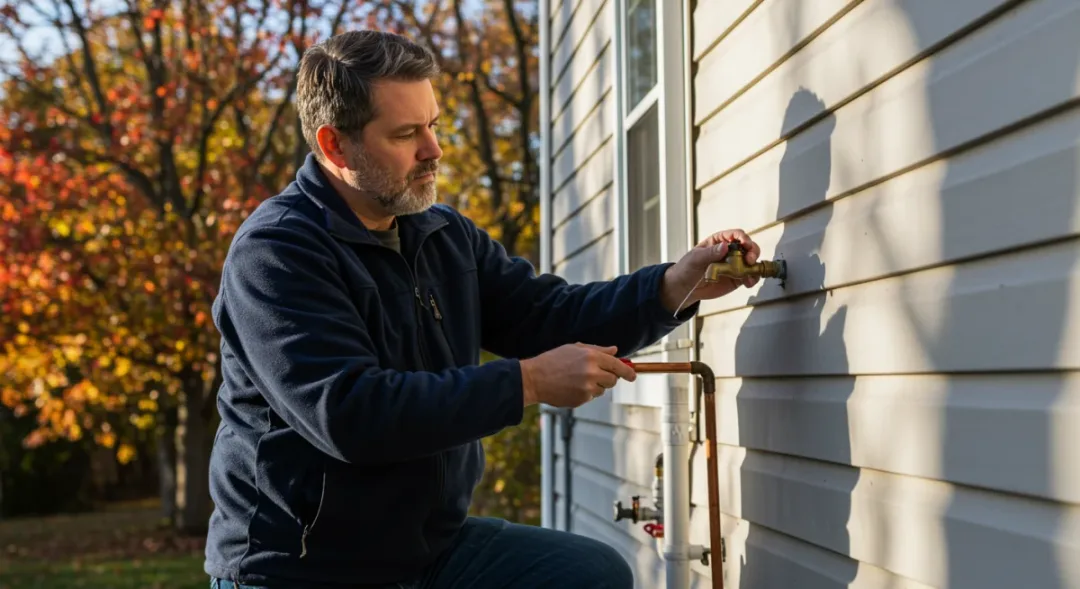
Disconnect all garden hoses and drain outdoor faucets completely. Any water remaining in these lines will freeze and expand, cracking the faucet or the connecting pipe inside your walls. Shut off outdoor water supplies at the interior valve if your home has separate shutoffs, and use faucet covers for added protection. Irrigation systems require complete blown-out professional winterization to remove all water from underground pipes.
Taking these exterior steps before the first frost arrives prevents the most common and easily avoidable sources of winter damage. The investment of an afternoon or two can save thousands in repairs.
Interior Systems: Securing Pipes and Heating
Inside your home, the plumbing system requires particular attention because pipes running through exterior walls or unheated spaces face the highest freeze risk. The heating system deserves equal consideration, as a failure during cold weather creates rapid temperature drops throughout the property.
Pipe Insulation Strategies
Identify all exposed pipes in basements, crawl spaces, and garages. These pipes benefit greatly from foam pipe insulation sleeves, which cost mere dollars but provide crucial protection. Pay special attention to pipes running through exterior walls, as these face the coldest temperatures even when interior spaces remain heated. For pipes in especially vulnerable locations, heat tape or heat cables provide active protection when temperatures drop dangerously low.
- Insulate pipes in unheated areas before winter arrives
- Seal air leaks where pipes enter walls to prevent cold drafts
- Keep cabinet doors open under sinks on exterior walls to allow warm air circulation
- Maintain consistent thermostat temperatures even when away from home
- Know your water main location for emergency shutoff situations
Heating System Maintenance
Schedule professional HVAC inspection and maintenance before winter begins. Replace air filters regularly throughout the heating season, as clogged filters reduce efficiency and strain equipment. Test all thermostats to ensure proper operation, and consider upgrading to a smart thermostat that maintains consistent temperatures and provides alerts if temperatures drop unexpectedly.
Your heating system works hardest during winter, and proper maintenance ensures it operates efficiently throughout the season while minimizing the risk of breakdown during frigid weather.
Attic and Insulation: Preventing Ice Dams and Heat Loss
The attic often receives insufficient attention despite its critical role in preventing freeze damage and maintaining energy efficiency. Proper attic insulation prevents the temperature imbalances that create ice dams, while adequate ventilation ensures any moisture that does enter can escape before causing damage.
Ice Dam Prevention
Ice dams form when heat escapes through the roof, melting snow that then refreezes at the eaves. This cycle creates ridges of ice that trap water, forcing it under shingles and into your home. Preventing ice dams requires maintaining proper attic insulation to keep the roof surface cold, along with adequate ventilation to remove any warm air that does escape.
Insulation Assessment
Check your current insulation levels in the attic floor. Most homes benefit from adding insulation if existing levels fall below recommended guidelines. Blown-in cellulose or fiberglass provides excellent coverage, and while the upfront cost may seem significant, the energy savings and damage prevention pay dividends throughout winter and beyond.
Proper attic preparation addresses multiple concerns simultaneously, reducing energy costs while preventing the water damage that ice dams cause. This one area of your home affects everything from your heating bills to your roof’s structural integrity.
Emergency Preparations and Quick Fixes
Despite the best preparation, emergencies can still occur during extreme weather events. Knowing how to respond quickly minimizes damage and keeps your family safe. Having the right tools and knowledge on hand transforms potential disasters into manageable situations.
Emergency Kit Essentials
Every homeowner should maintain an emergency kit specifically for winter weather situations. This kit should include portable flashlights, extra batteries, a battery-powered radio, emergency contact numbers, and basic plumbing repair supplies like pipe repair clamps and waterproof tape.
- Portable flashlight and extra batteries for power outages
- Waterproof pipe repair tape and temporary pipe clamps
- Portable space heater rated for indoor use safely
- Emergency contact list including plumber and insurance information
- Bucket and towels for containing minor water leaks
Quick Response Procedures
If pipes do freeze, never use open flames to thaw them. Instead, use a hair dryer, heat gun on low setting, or hot towels applied gradually. If pipes have burst, immediately shut off the water main and contact a plumber. Document everything with photographs for insurance purposes, and begin drying affected areas as quickly as possible to prevent mold growth.
Understanding these emergency procedures ensures you can act quickly and effectively when problems arise, potentially saving thousands in damage and reducing the disruption to your daily life.
Cost-Saving Strategies and Long-Term Investments
Winterization involves both immediate actions and longer-term investments that provide ongoing protection and savings. Understanding which improvements offer the best return helps homeowners prioritize their efforts and budget effectively.
High-Return Improvements
Certain upgrades provide exceptional value for winter protection. Smart thermostats reduce energy costs while preventing frozen pipes through consistent temperature maintenance. Pipe leak detectors provide early warnings that prevent catastrophic damage. Sump pumps with battery backup prevent flooding from snowmelt or unexpected water intrusion.
- Smart thermostats for consistent temperature control and monitoring
- Whole-house water shutoff valves with automatic leak detection
- Backup power sources for essential heating equipment
- Professional energy audits identifying specific improvement opportunities
- High-efficiency windows and doors for long-term savings
While these investments require upfront capital, they pay for themselves through reduced energy bills, lower insurance premiums, and avoided repair costs. Many utility companies offer rebates and incentives for energy-efficient improvements, making certain upgrades even more financially attractive.
Seasonal Maintenance Schedule
Establishing a consistent seasonal maintenance routine ensures nothing gets overlooked year after year. Creating a checklist and following it religiously prevents the gaps in preparation that lead to damage.
Fall brings the most critical preparation tasks. Before temperatures drop consistently, complete all exterior work, inspect heating systems, and stock emergency supplies. Winter requires ongoing attention to temperature settings and monitoring for problems. Spring provides an opportunity to reverse winterization steps and assess any damage that occurred during the cold months.
This cyclical approach keeps your home protected continuously rather than through sporadic effort. Documentation of completed tasks also helps track what works and where improvements might be needed.
| Key Point | Brief Description |
|---|---|
| Pipe Insulation | Install foam sleeves on exposed pipes in unheated areas and seal air leaks where pipes enter walls |
| Exterior Protection | Disconnect hoses, drain outdoor faucets, and cover irrigation systems before freezing temperatures arrive |
| Heating System | Schedule professional HVAC inspection, replace filters regularly, and test all thermostats before winter |
| Attic Preparation | Ensure adequate insulation and ventilation to prevent ice dams and reduce heat loss through the roof |
Frequently Asked Questions
When should I start winterizing my home?▼Begin winterizing your home in early fall, ideally before temperatures consistently drop below 50 degrees Fahrenheit. Complete exterior work like draining faucets and sealing windows by late October in most northern states, while southern regions may have more flexibility. Starting early ensures you complete all tasks properly without rushing before the first frost.
How much does professional winterization cost?▼Professional winterization services vary widely based on your home’s size and location. Basic professional services, including HVAC inspection and pipe insulation, typically cost between 200 and 500 dollars. Comprehensive services including irrigation winterization and detailed inspections may reach 1,000 dollars or more, though this investment prevents far costlier repairs.
Does homeowners insurance cover freeze damage?▼Standard homeowners policies typically cover sudden and accidental freeze damage, such as burst pipes, but generally exclude damage from neglect or failure to maintain proper heat. Many policies require you to maintain heat in the home or drain plumbing during extended absences. Review your specific policy and consider additional coverage if you live in an area with severe winter weather.
What temperature should I set my thermostat to prevent frozen pipes?▼Keep your thermostat set to at least 55 degrees Fahrenheit to prevent frozen pipes, even when you’re away from home. This applies to all levels of your home, as cold air settles in basements and crawl spaces. If you’re concerned about energy costs, open cabinet doors under sinks on exterior walls to allow warm air circulation rather than lowering temperatures.
How do I know if my pipes are at risk of freezing?▼Pipes in unheated spaces like basements, garages, and crawl spaces face the highest freeze risk. Pipes running through exterior walls, particularly those with minimal insulation, also pose significant risk. Check for drafts around pipe openings, feel for cold spots on walls where pipes run, and consider installing temperature sensors near vulnerable pipes that alert you to dangerous drops.
Conclusion
Protecting your home from freeze damage requires attention to multiple systems and consistent effort throughout the seasons. By following this complete winterization guide, you address the most common sources of winter damage while creating a safer, more efficient home. The investment of time and resources in proper preparation pays dividends through avoided repairs, reduced energy costs, and the peace of mind that comes from knowing your home can withstand whatever winter brings. Start your winterization efforts today, and enjoy the colder months knowing your home remains protected against freeze damage.
Written by
Lucas Bastos
Lucas Bastos writes about home for insider.onlyshein.com. Each article explains how things work, compares published details such as prices, policies and program rules, and points readers to the official source before they decide.