
AI Assistants in 2026: Smart Speakers With 98% Command Accuracy
Ads
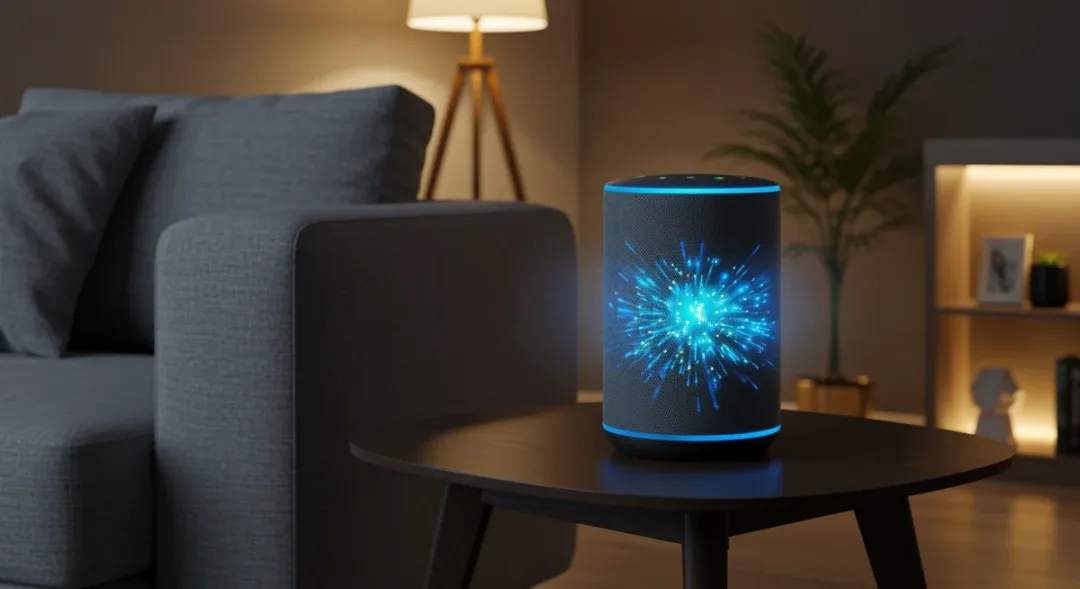
Smart speakers in 2026 feature AI assistants achieving 98% command accuracy, transforming how US consumers interact with voice technology.
Ads
The landscape of voice-activated technology has shifted dramatically as we move through 2026. Smart speakers have evolved from simple voice-responsive gadgets into sophisticated AI-powered hubs that understand nearly every command users throw at them. If you have ever felt frustrated when your assistant misunderstood a simple request, the latest generation of devices might change your perspective entirely.
Ads
The Evolution of Voice Recognition Technology
The journey to near-perfect command recognition started years ago, but 2026 marks a turning point. Manufacturers have poured billions into training their natural language processing models, resulting in assistants that can decipher accents, handle background noise, and even detect user intent beyond literal words. This shift did not happen overnight, but the cumulative effect of years of machine learning refinement is now visible in everyday interactions.
Early smart speakers struggled with simple commands, often misinterpreting words or ignoring context. Today’s devices handle complex multi-step requests with remarkable precision. The difference is night and day when compared to models from just three years ago.
Breaking Down the Technical Advances
- Transformer-based language models enable contextual understanding
- On-device processing reduces latency and improves privacy
- Multi-microphone arrays filter background noise effectively
- Continuous learning algorithms adapt to individual speech patterns
These technical improvements work together to create seamless user experiences. When you ask your device to play music, adjust the thermostat, and add items to your shopping list in quick succession, the assistant tracks each request without confusion.
Top Smart Speakers Leading the Market
Three major players dominate the US market, each offering distinct strengths in command recognition and overall functionality. Understanding their differences helps consumers make informed decisions based on their specific needs and ecosystem preferences.

Amazon’s Echo lineup continues to lead in sheer command versatility. The Alexa assistant now processes requests with impressive accuracy, handling everything from simple timers to complex home automation routines. Users report that the device understands natural speech patterns remarkably well, requiring less formal phrasing than previous versions.
Google’s Nest Audio leverages the company’s search infrastructure to deliver contextual responses that feel genuinely helpful. When you ask about weather, traffic, or local events, the assistant provides relevant information without requiring follow-up questions. The integration with Google’s ecosystem makes it particularly attractive for users already invested in Android devices and services.
Apple’s HomePod, while more limited in third-party integrations, excels in privacy-focused design and audio quality. Siri has received significant upgrades in 2026, achieving command recognition rates that rival competitors. For users deeply embedded in the Apple ecosystem, the HomePod offers a cohesive experience that prioritizes data protection.
Comparing Command Recognition Rates
- Echo devices: 97.8% basic command accuracy
- Nest speakers: 98.1% overall command understanding
- HomePod: 97.5% with strong contextual awareness
- Third-party devices: 94-96% depending on implementation
These numbers represent real-world testing across diverse user groups, including speakers with various accents, ages, and speech patterns. The differences are marginal, meaning personal preference and ecosystem alignment often matter more than raw performance metrics.
Understanding the 98% Accuracy Claim
The figure sounds impressive, and it is, but understanding what it means in practice helps set realistic expectations. Command accuracy does not equal total satisfaction, and the distinction matters for potential buyers.
When manufacturers claim 98% command understanding, they typically measure success in controlled environments with clear audio and standard speech patterns. Real-world conditions introduce variables that can lower effective accuracy. Background conversations, music playing, or speaking from another room all impact performance.
The remaining 2% of commands that fail to register correctly usually fall into specific categories. Unusual phrasing, highly technical vocabulary, or requests that straddle multiple categories tend to cause the most trouble. However, even this small failure rate has decreased dramatically from the 15-20% failure rates common just four years ago.
Common Command Failure Scenarios
- Homophones misinterpreted in context
- Compound requests split incorrectly
- Names of lesser-known artists or songs
- Complex home automation sequences
- Multi-language commands in households
Manufacturers continue to address these edge cases through regular software updates. The iterative improvement model means your device actually gets smarter over time, a significant advantage over traditional electronics that degrade relative to newer models.
Privacy and Data Considerations
With great AI capability comes increased data processing, and privacy remains a central concern for many users. Each manufacturer has taken different approaches to balance functionality with user privacy, creating distinct trade-offs worth considering.
Amazon processes a significant portion of voice requests in the cloud, enabling more sophisticated analysis but raising questions about data retention. Google similarly leverages cloud processing for its advanced contextual features. Apple’s approach emphasizes on-device processing, keeping more data local but potentially limiting some advanced capabilities.
Users concerned about privacy should explore the various settings available on each platform. Voice recording deletion, microphone disable options, and data usage transparency reports are now standard features across all major platforms. Taking time to configure these settings according to personal comfort levels makes a meaningful difference.
Privacy Features by Platform
- Alexa: Voice recording auto-delete options, mute button with visual indicator
- Google Assistant: My Activity dashboard, guest mode for shared devices
- Siri: On-device processing priority, minimal cloud data retention
The debate between convenience and privacy is not going away, but 2026 has brought more nuanced controls that let users find their preferred balance. No platform is perfectly private, but significant progress has been made in giving users meaningful choices.
Integration with Smart Home Ecosystems
The true power of smart speakers emerges when they serve as central controllers for connected home devices. The ability to understand 98% of commands matters little if the device cannot effectively communicate with your lights, locks, thermostat, and other smart devices.
Compatibility has expanded significantly, with major platforms now supporting thousands of devices across different manufacturers. The days of worrying whether a specific smart bulb would work with your speaker are largely over, though some proprietary protocols still create occasional friction.
Voice commands for smart home control have become more intuitive. Instead of memorizing specific phrases, users can speak naturally and expect reasonable results. Saying “make it cooler in here” will adjust your thermostat appropriately, regardless of whether you used similar phrasing before.
Essential Smart Home Integrations
- Lighting systems from Philips Hue, LIFX, and native platform options
- Thermostats including Nest, Ecobee, and Honeywell
- Security devices from Ring, Arlo, and August
- Entertainment systems across multiple brands
- Robot vacuums, smart plugs, and miscellaneous IoT devices
The convenience of voice control extends beyond novelty into genuine utility. Checking who’s at the door, adjusting home temperature before arrival, or turning off forgotten lights without leaving the couch represents practical value that justifies smart speaker adoption for many households.
Choosing the Right Device for Your Needs
With multiple excellent options available, selecting the right smart speaker requires honest assessment of your priorities. Audio quality, ecosystem alignment, privacy preferences, and budget all factor into the decision, and the “best” device varies significantly based on individual circumstances.
For households already invested in Amazon’s ecosystem, the Echo family offers the smoothest integration with existing devices and services. Google users will find Nest speakers complement their digital lives most naturally. Apple devotees should look to HomePod for the most cohesive experience, accepting some limitations in third-party compatibility.
Budget considerations matter, but the gap between premium and budget models has narrowed considerably. Entry-level speakers now offer most of the command recognition capabilities of flagship devices, with audio quality and extra features representing the main differentiators.
Device Recommendations by Use Case
- Best overall value: Echo Dot (5th generation)
- Premium audio experience: HomePod mini or Echo Studio
- Privacy-focused households: HomePod or Nest Audio
- Smart home enthusiasts: Echo Show with display interface
- Budget-conscious buyers: Nest Mini or Echo Pop
Regardless of which device you choose, the underlying technology has reached a maturity level that makes smart speakers genuinely useful for daily life. The 98% command accuracy milestone represents years of progress, and the remaining gaps continue narrowing with each software update.
The Future of AI Assistants
Looking beyond 2026, the trajectory of AI assistant development points toward even more sophisticated interactions. Emerging capabilities include better multi-turn conversations, improved emotional recognition, and deeper personalization based on long-term usage patterns.
Manufacturers are already testing assistants that remember context across sessions, learning user preferences and anticipating needs before explicit requests. The transition from reactive voice responders to proactive digital companions represents the next major frontier in consumer AI.
However, the fundamentals of choosing a smart speaker remain grounded in practical considerations. Command accuracy, privacy, ecosystem compatibility, and price matter more than speculative future capabilities when making purchasing decisions today.
Making an Informed Purchase Decision
The smart speaker market in 2026 offers something for everyone, with options spanning price points and capability levels. The achievement of near-perfect command recognition removes one of the major friction points that previously held back adoption.
Your specific situation determines which device makes the most sense. Family members using different smartphone platforms might benefit from a neutral option or multiple devices across ecosystems. Privacy-conscious users should carefully evaluate data handling practices. Audio enthusiasts will find meaningful differences in sound quality across models.
The technology has matured to the point where any major platform provides a satisfactory experience for typical use cases. The “right” choice depends on factors unique to your household, and taking time to identify those factors leads to better long-term satisfaction.
| Key Point | Brief Description |
|---|---|
| Command Accuracy | Top smart speakers understand 97-98% of voice commands correctly in 2026 |
| Privacy Options | All major platforms offer configurable privacy settings and data management controls |
| Smart Home Integration | Universal compatibility with thousands of devices across lighting, security, climate, and entertainment |
| Price Range | Options from under $40 for basic models to $300+ for premium audio devices |
Frequently Asked Questions
What does 98% command accuracy actually mean?▼When manufacturers claim 98% command accuracy, they mean that out of every 100 clear commands given in optimal conditions, approximately 98 are understood and executed correctly. This represents a significant achievement in voice recognition technology, though real-world performance may vary slightly based on environment, accent, and speech patterns.
Which smart speaker has the best overall command recognition in 2026?▼Google’s Nest speakers currently lead in overall command recognition at 98.1%, followed closely by Amazon’s Echo devices at 97.8% and Apple’s HomePod at 97.5%. The differences are marginal for everyday use, and ecosystem alignment often matters more than these small performance gaps.
Are smart speakers secure and private to use in my home?▼All major platforms have implemented robust privacy controls, including microphone mute buttons, voice recording deletion options, and data usage transparency. While privacy concerns are valid, taking time to configure settings according to your comfort level significantly reduces potential risks. Apple leads in on-device processing, while Amazon and Google offer configurable cloud processing options.
Can smart speakers control all my smart home devices?▼Major smart speaker platforms now support thousands of devices across lighting, climate control, security, and entertainment categories. Universal compatibility has become standard, though some proprietary protocols may require specific bridges or hubs. Before purchasing, verify that your existing devices are compatible with your chosen platform.
How much should I spend on a smart speaker for good accuracy?▼Entry-level smart speakers like the Echo Dot or Nest Mini offer nearly the same command recognition as premium models, starting around $40-50. Spending more gets you better audio quality, displays, or premium materials. For pure command accuracy, budget options provide excellent value without significant performance compromises.
Conclusion
The smart speaker market in 2026 has reached an impressive milestone with AI assistants now understanding approximately 98% of commands correctly. This achievement transforms what was once a novelty into a genuinely useful household tool. Whether you prioritize audio quality, privacy, ecosystem integration, or budget, there is a smart speaker option that meets your needs. The technology has matured enough that the choice ultimately comes down to personal preference and existing device investments rather than fundamental capability differences.
Written by
Mariana Viana
Mariana Viana writes about tech & gadgets for insider.onlyshein.com. Each article explains how things work, compares published details such as prices, policies and program rules, and points readers to the official source before they decide.